
 3 hours ago
595
3 hours ago
595

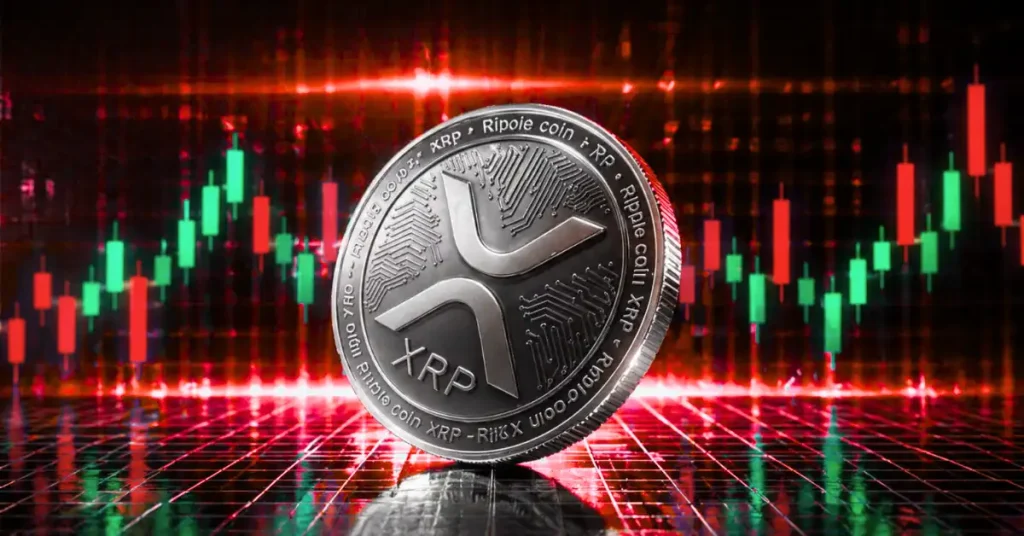
In a striking revelation, David Schwartz, Ripple‘s former Chief Technology Officer, has dispelled the confusion surrounding the origins of XRP. Schwartz clarified that XRP was not the brainchild of Canadian developer Ryan Fugger, contrary to widespread assertions. His response comes amid escalating debates over who deserves credit for this pioneering digital currency.
What Role Did RipplePay Play?
RipplePay, initiated by Fugger in 2004, is often mistakenly linked to XRP’s inception due to its coincidental name similarity. However, Schwartz stressed that XRP’s inception only took place in 2012, separate from the earlier RipplePay platform. He emphasizes that Fugger’s system was a typical payment approach based on mutual trust, lacking any blockchain technology or digital currency components.
“According to Schwartz, XRP’s true history began in 2012, and any effort to trace a ‘hidden founder’ back to earlier times lacks technical basis.”
The transition of RipplePay into a new era was marked by Chris Larsen and Jed McCaleb acquiring the platform from Fugger. They aimed to leverage its established brand without retaining any of its technical infrastructure. This pivotal move paved the way for the creation of an entirely new code for the XRP Ledger and the XRP token, formulated by visionary minds McCaleb, Arthur Britto, and Schwartz himself.
What About the Rewritten Code?
Indeed, the team built everything from scratch. Schwartz noted that the brand recognition was the only surviving element, not the underlying technology from the older RipplePay system. Ripple, now an industry leader in cross-border payment solutions, relies on the robust open-source XRP Ledger to support its operations, effectively distancing itself from past technological configurations.
Intriguingly, speculations linking Schwartz’s old patents from 1988 to 1991 with XRP’s development have fueled online rumors. Some enthusiasts even suggested possible ties to the US government, based on Schwartz’s historical patents. However, these patents align more closely with early distributed computing concepts rather than the blockchain-driven architecture of today’s XRP.
In response, Schwartz dismissed such theories, highlighting that his past work is technologically irrelevant to the modern construction of the XRP Ledger. He argued that these claims retrospectively force-fit speculative narratives onto established facts, a sentiment often entertained despite lacking substantive proof.

- XRP’s lineage officially traces back to 2012, dismissing prior unverified claims.
- Schwartz, McCaleb, and Britto developed a fresh technical foundation for XRP.
- RipplePay’s acquisition was strategic for branding, not for technology.
- Historical patents and earlier platforms hold no bearing on current XRP infrastructure.
Schwartz’s elucidation firmly roots XRP’s creation in 2012, drawing a clear line away from earlier misconceptions. While these legends persist as historical footnotes, they lack validity in the face of the new codebase that truly underpins XRP’s existence today. This clarity not only reassures current users but also counters persistent myths that have clouded XRP’s developmental story.














 English (US)