
 2 hours ago
884
2 hours ago
884

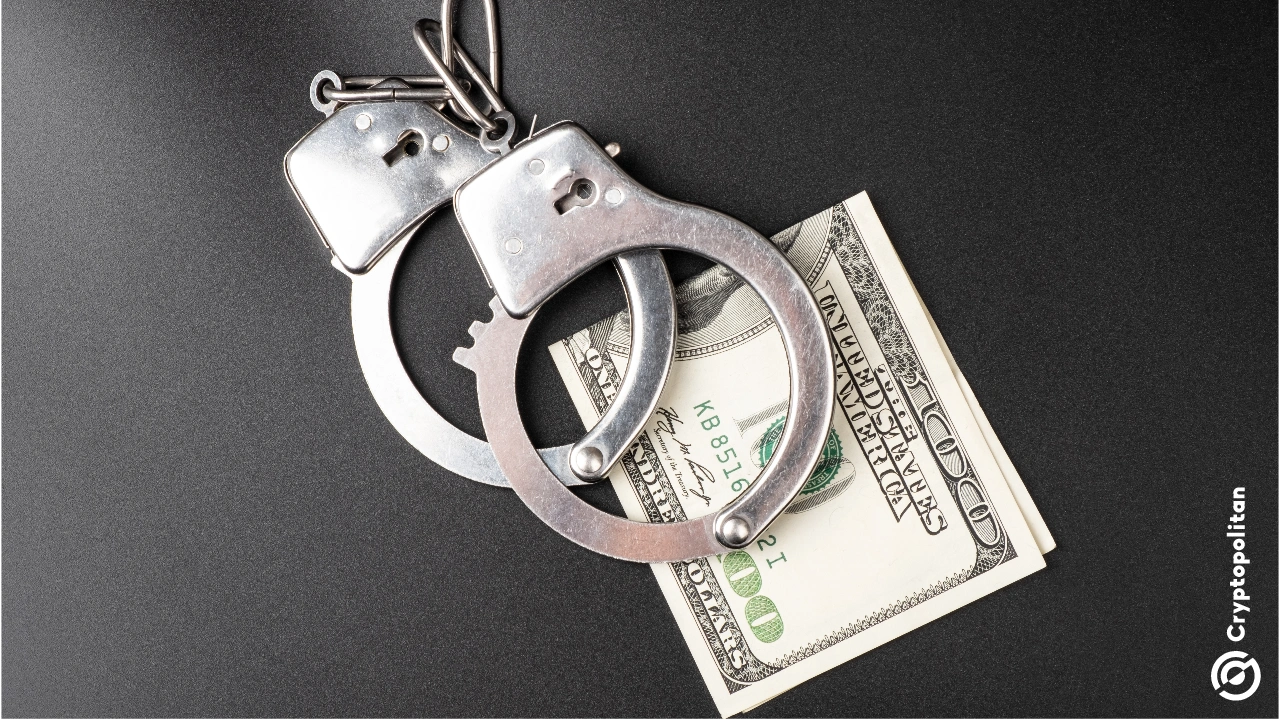
Police in Marseille, France said they arrested four suspects over the weekend after they interrupted what appears to be a crypto robbery that was escalated into a kidnapping attempt as the accused reportedly held two women hostage.
News of the arrests, which first appeared in the local French newspaper La Provence, marks the first instance of such an operation targeting crypto holders in the Marseille region.
Earlier Cryptopolitan reports have followed the crime wave that the appetite for crypto has unleashed on France, with over 70 such attacks reported across the country this year alone.
Arrested suspects were on a rampage
The suspects that Marseille police picked up were involved in a chain of illegal events that reportedly began around 3 a.m. on Saturday, June 14.
The suspects fled and left a license plate number on the scene after a failed attempt to enter the house of a family living in a residential neighborhood in Marseille’s 13th arrondissement.
The same group was implicated for at least two more attacks reported across the towns of Gardanne and Gignac-la-Nerthe that same night.
Police eventually caught the four men holding two women against their will and demanding access to their digital asset wallets.
Apparently, the victims that the group targeted throughout their one-night campaign had records of crypto gains.
The 13th arrondissement victims were reportedly parents of an investor who had exited his holdings more than a year ago. Investigators believe the attackers targeted the household based on outdated information.
Marseille’s Brigade de Répression du Banditisme (BRB), the organized crime unit, has taken over the investigation.
Violent crypto crime spreads to the south of France
France has experienced a sharp acceleration in physical attacks on crypto holders and their families. Authorities confirmed in April that more than 40 kidnappings or attempted abductions linked to cryptocurrency had been recorded since the start of 2026.
Philippe Chadrys, deputy national director of the judicial police, told reporters at the time that criminal networks orchestrating these operations are frequently based outside France.
“The modus operandi and targeting methods vary,” Chadrys said, according to Le Monde, noting that the identities of victims are sometimes revealed to the actual attackers only at the last moment.
The trend built through 2025, when around 30 cases were logged, according to Annabelle Vandendriessche, who heads the Interior Ministry’s organized crime intelligence service (Sirasco).
CertiK, a blockchain security firm, tallied 19 confirmed “wrench attacks” in France during 2025, with victims losing a combined $40.9 million, as Cryptopolitan previously reported.
How are French crypto robbers picking their victims?
A recurring element across recent French cases is that attackers appear to know exactly whom to target. In one incident reported by Le Parisien on June 14, three men posing as police officers attacked a couple in Nancy after obtaining the husband’s crypto balance from the January breach of Waltio, a French crypto tax reporting platform.
That hack exposed email addresses, trading records, and portfolio values for approximately 50,000 users, according to Cryptopolitan.
Telegram founder Pavel Durov has pointed to a separate breach at France’s Agency for Secure Documents, which reportedly exposed personal data belonging to 19 million people.
While Durov’s claim that tax officials are selling data directly remains unverified, the underlying problem is well documented: French law requires crypto holders to declare wallet addresses and capital gains, creating centralized records that become high-value targets for hackers.
How is France responding?
Law enforcement has responded with increasing force. French prosecutors had charged 88 individuals in connection with crypto kidnappings as of April, according to Cryptopolitan.
In Morocco, a court sentenced 25-year-old Mohamed Hamid Bajou to 25 years in prison for masterminding a string of abductions in France, including the January 2025 kidnapping of Ledger co-founder David Balland, whose attackers severed one of his fingers before police intervened.
The Marseille-area arrests over the weekend suggest that criminal groups are now probing regions they previously avoided. For the BRB investigators handling the case, the license plate captured by the first family in the 13th arrondissement may prove to be the thread that connects these suspects to a broader network.
Crypto holders in France, meanwhile, face a paradox: regulations designed to bring transparency to digital asset ownership are generating exactly the kind of centralized personal data that physical attackers need to find their victims.
Don’t just read crypto news. Understand it. Subscribe to our newsletter. It's free.

















 English (US)