
 1 month ago
8882
1 month ago
8882

Institutional players have signaled their unwavering confidence in DeFi infrastructure, backing the ecosystem to maintain its stranglehold on the future of FinTech, according to Morpho co-founder Paul Frambot and an April report by Bitcoin Suisse.
The comments by Frambot came as the dust settled on the KelpDAO hack that led to about $292 million in initial losses and more than $15 billion leaving the DeFi ecosystem in the days that followed.
Bitcon Suisse published its report in April 2026, covering data from Hyperliquid’s L1 from November 2024, around the time it launched its Assistance Fund program, until February 2026.
However, Frambot and Bitcoin Suisse both added caveats. Frambot reported that institutional players have “completely lost trust in pool/hub models,” clarifying that institutions and distributors “want control: over the code, over the risk, over the compliance.”
DeFi TVL has steadied in the $83-85 billion range after the initial panic that led to large-scale withdrawals from Aave into other protocols and complete market exits.
Aave and DeFi are on the way back
According to Paul Frambot, he “spent the last calling the largest institutions” and their position on DeFi remains unshaken. He claimed to have confirmed the inevitability of assets, payments, and loans coming on-chain.
The bullish signals from institutional players come as the DeFi United fund has attracted close to $250 million in ETH commitments, with cross-protocol and inter-network participation from stakeholders with skin in the DeFi game.
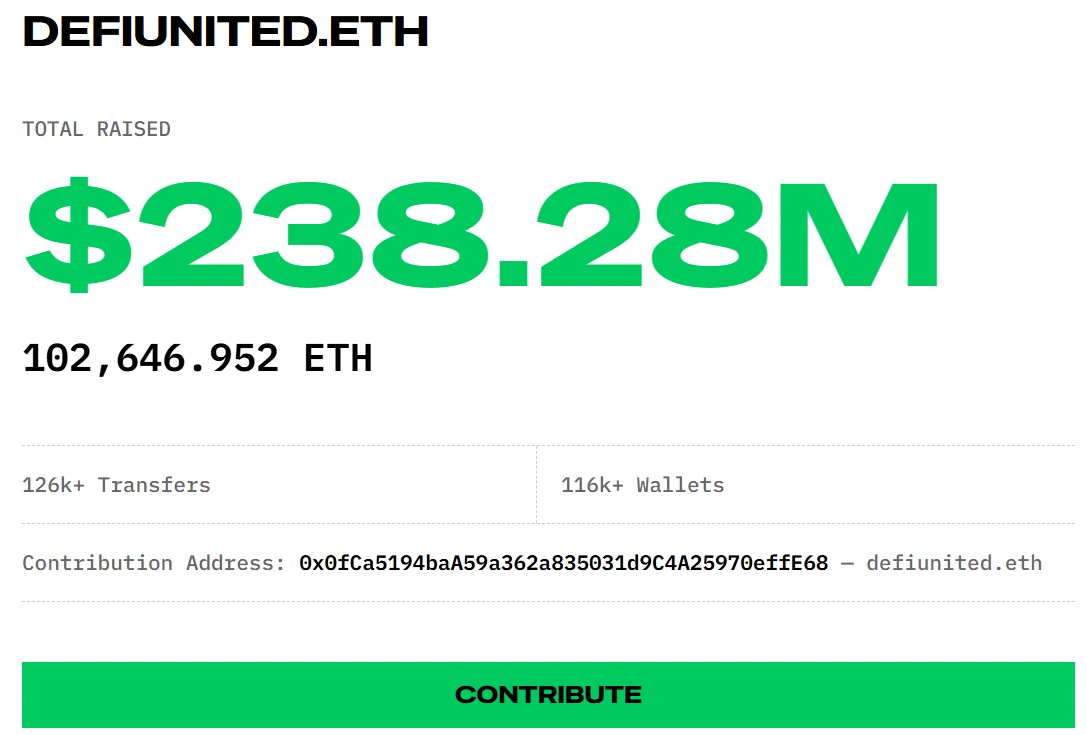 Funds donated to the DeFi United recovery fund. Source: defiunited.eth
Donations are up to about 102,646 ETH of the 116,500 ETH goal, the amount of rsETH that hackers stole during the hack event.
Earlier in the day, Justin Sun announced that the Tron network and HTX exchange will band together to commit $20 million in USDT into the Aave V3 market.
Other big donors to have already sent their commitments include Arbitrum DAO, Mantle, Aave DAO, Aave founder Stani Kulechov, Kelp, Mantle, and the recently departed BGD Labs.
LayerZero and Ethena have also committed to donating unconfirmed amounts to support the initiative.
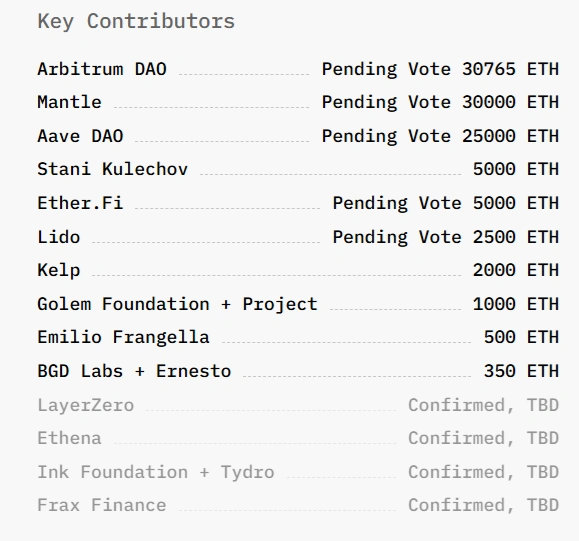 Top donors to the DeFi United recovery fund. Source: defiunited.eth
Hyperliquid gets Bitcoin Suisse thumbs up
Bitcoin Suisse published a 10-page report on Hyperliquid’s dominance of the decentralized perpetual trading scene. However, even more impressive is that the DEX trading venue has started consistently posting volumes that exceed those of some of the biggest names in centralized trading, a subset that has historically dominated the numbers due to their simpler interfaces and large liquidity reserves.
The report pointed to Hyperliquid’s $820 million in revenue in 2025 and its outperformance relative to leading venues such as the Solana network and the Pump.fun meme launchpad.
As further evidence of its stranglehold on the trading domain, Bitcoin Suisse highlighted the protocol accounting for 41% of the open interest of decentralized perpetual futures markets and between 5-7% of the total volume processed by CEXs, only behind Binance, OKX, and Bybit and ahead of America’s largest exchange, Coinbase.
Hyperliquid has retained its top spot since the February data cutoff in the Bitcoin Suisse report, outperforming the next largest platform by about 1.5x-3x across open interest and volume metrics. Hyperliquid now accounts for more than 50% of open interest, extending its lead in that area as well.
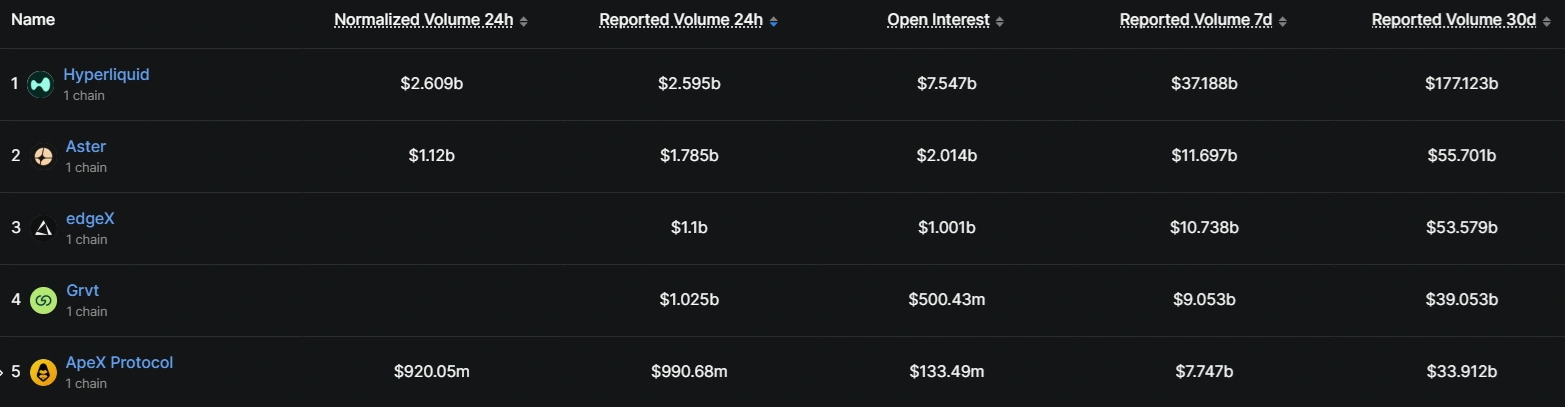 Hyperliquid continues to lead perpetual futures DEXs. Source: Defillama
Hyperliquid is on track for future growth
Cryptopolitan reported earlier in the month when Hyperliquid reached a new record of 6.9% of all perpetual futures trading, riding on the demand for RWA trading on its HIP-3 market, which also set a new $2.3 billion record in the same month.
Per the Zug-based firm, the perps DEX platform is also already planning its next expansion phase, HIP-4, to “transform Hyperliquid from a DEX into financial infrastructure.” The new update is expected to bring the booming prediction market sector to Hyperliquid, pitting it against market leaders Kalshi and Polymarket.
Bitcoin Suisse has been around since 2013, playing a pivotal role in Ethereum’s early development, and also offers trading services for Hyperliquid and Monad.
The smartest crypto minds already read our newsletter. Want in? Join them.















 English (US)