
 2 months ago
9704
2 months ago
9704

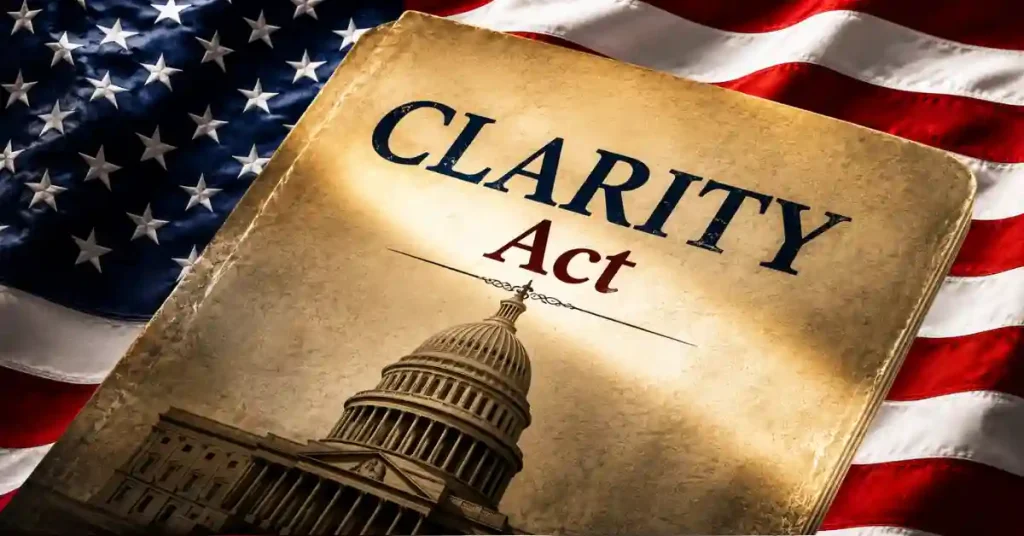
The United States Senate is nearing the conclusion of the Digital Asset Market Clarity Act, with a committee review scheduled for mid-April. Discussions around the bill have intensified, as Senator Cynthia Lummis suggests that the finalized draft might soon be released, aiming for a Senate vote in May.
What Does the Revised Bill Entail?
The Clarity Act has faced extensive amendments, largely centered on stablecoin yield terms. Legislators have finally settled a long-standing debate by agreeing to eliminate passive income from stablecoin holdings. This provision aligns with banking sector demands, which have consistently resisted passive yield offerings for crypto holders.
Instead, the compromise introduces performance-based rewards linked to payment activities and platform engagement, moving away from broader user incentives seen in previous drafts. Although crypto enthusiasts initially valued yield-bearing stablecoins, the concession is aimed at ensuring bipartisan support.
How Will DeFi and Regulatory Responsibilities Shift?
The revised Clarity Act also aims to bolster protections for decentralized finance. It clarifies that developers and operators of non-custodial crypto systems won’t be equated with financial intermediaries. Earlier drafts had sparked concerns over potential regulatory burdens akin to those of traditional banks.
Despite these changes, most of the bill’s framework remains intact. It continues to delegate digital asset regulation to two key U.S. bodies: the CFTC for digital commodities, and the SEC for assets considered as investment contracts.

Efforts to advance the bill have gained urgency, as delaying beyond May could risk postponing digital asset regulation until after the 2026 midterms, Senator Bernie Moreno cautions. This political climate fuels bipartisan determination to resolve unresolved matters quickly.
Some crypto industry members are unhappy with restrictions on passive yield, but others welcome enhancements in DeFi protections. The adjustments reflect intricate negotiations balancing industry demands, political dynamics, and regulatory clarity.
Key takeaways from the Clarity Act include:
- Elimination of passive income from stablecoin holdings.
- Shift towards performance-based rewards for crypto activity.
- Clarified protections for DeFi developers against traditional financial regulations.
- Continued division of regulatory oversight between the CFTC and SEC.
As the bill heads for markup, stakeholders will be observing whether the proposed measures can provide much-needed legal clarity for U.S. crypto markets, while the industry adapts to meet new compliance obligations.
Disclaimer: The information contained in this article does not constitute investment advice. Investors should be aware that cryptocurrencies carry high volatility and therefore risk, and should conduct their own research.








![KOSPI Index Crash, South Korea Stock Market Bloodbath [LIVE] – 8th June](https://image.coinpedia.org/wp-content/uploads/2026/03/03183804/Korean-Stock-Market-Crash-KOSPI-Plunges-7-Amid-U.S.%E2%80%93Israel-Iran-War-1-1024x536.webp)








 English (US)