
 2 months ago
5286
2 months ago
5286
.png)
Crypto cards are one of the most active sectors in the space, so far defying the sluggish trading sentiment. Recently, crypto card platforms reported a peak in weekly top-ups from users.
Crypto card top-ups and payments signal a new spike of activity, leading influencers to talk about “crypto card summer.” In June, 10 crypto native projects showed peak volumes in terms of usage and transactions. The trend continued in the first week of July, where the top 5 projects kept setting new usage records.
As Cryptopolitan reported earlier, crypto card spending broke above $10B, while remaining one of the best product-market fits for on-chain products.
Crypto cards reflect several trends, one of which is the wider adoption of stablecoins. The other trend is the ongoing crossover between crypto and fintech apps.
Crypto cards reach record top-ups in June
More funds are flowing into crypto cards, leading to a new record in card top-ups, based on Paymentscan data.
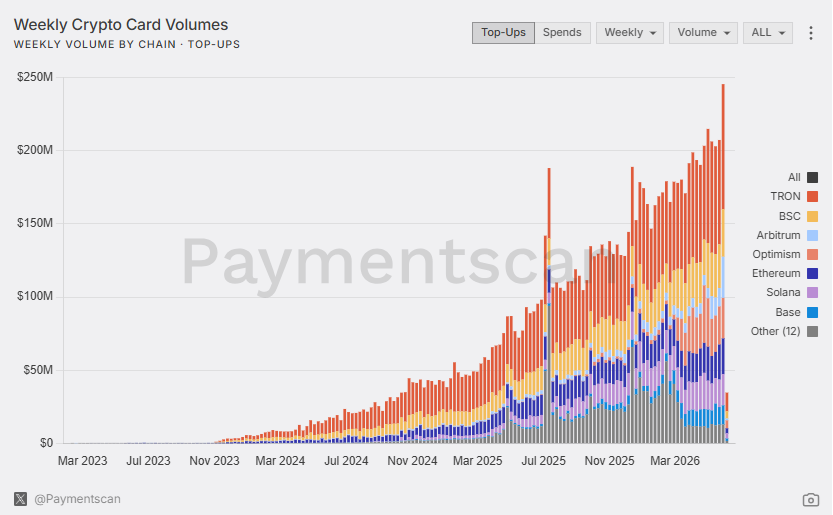 Crypto card top ups reached a new record in the last week of June, while spending is also near an all-time peak. | Source: Paymentscan
Crypto card spending is also at peak levels, as a lagging indicator. However, influencers warned that crypto cards are currently holding aggressive point farming campaigns, and not all projects will be viable. Some of the card activity may hinge on the eventual promise of releasing a token with airdrop allocations for the most active users.
Based on user activity, crypto card top ups and spending engage different networks. As of July 7, the leading cards for inflows are on TRON and BNB Chain. At the same time, the biggest spending comes from crypto cards based on Optimism, Base, and Arbitrum.
The recent inflows to TRON and BNB chain cards follow the recent decision of Revolut to drop USDT, which is still one of the most widely used stablecoins. Crypto cards, especially those for regions outside the Euro Area, still offer full access to USDT.
Can crypto neobanks survive regulations?
The recent trend of crypto cards is revealing another drive to boost crypto neobanks as a major use case. Some of the recent spikes in activity may be tied to incentives and eventual airdrops for crypto card projects.
Currently, few crypto card startups have issued tokens, while CRO remains one of the leading legacy assets. However, some cards are boosting their usage statistics with an airdrop promise.
According to influencers, crypto cards and neobanks are becoming more influential every day. However, critics warn that card companies will face serious scrutiny and may lose access to some regions.
Ana Gabriela Ojeda Caracas, head of Blend Money, warned that not all neobanks will survive the next 18 months. For some projects, the removal of access to a market may arrive abruptly. Caracas warned the elevated crypto activity also raised the bar for compliance, especially when requiring real-time sanctions screening, not just batch transactions and account checking.
Unlike P2P transfers, card transactions with real-world payments are more stringent about KYC and attempts to circumvent sanctions or use illicit funds.
The other issue is for end users, as crypto cards do not have a unified standard of ownership. The best approach is to use a self-custodial card, where the funds are held in an accessible wallet and cannot be frozen.
Recently, one of the card issuers on Solana revealed a custody problem. KAST, one of the current leaders on Solana, essentially controls stablecoins for users, as deposits are considered a trade.
End users must keep close track of the terms and conditions on crypto cards, as each has a different approach to custody. Forex differences and swaps between stablecoins also affect user experience.
If you're reading this, you’re already ahead. Stay there with our newsletter.















 English (US)