
 1 month ago
8691
1 month ago
8691

The post XRP News: Ripple CTO Says One Metric Matters More Than Price appeared first on Coinpedia Fintech News
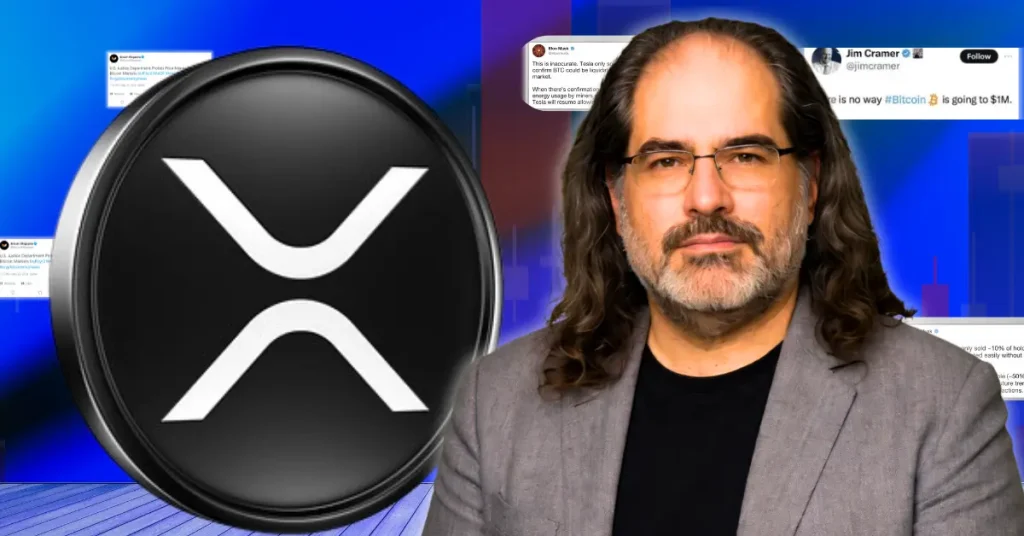
Ripple’s chief technology officer David Schwartz said transaction activity and liquidity are the most reliable indicators of real economic use on the XRP Ledger, as debate continues over how to measure blockchain adoption beyond price movements.
Speaking during a discussion on on-chain data and market trends, Schwartz said metrics that reflect sustained usage and value transfer are more meaningful than short-term fluctuations or headline-driven activity.
Transaction Volume as Primary Signal
According to Schwartz, transaction activity remains the clearest measure of genuine network use. He said the XRP Ledger has processed more than four billion transactions to date, with settlement typically completed in four to five seconds at predictable, low fees.
Transactions on the network cost a fraction of a cent, a design choice Schwartz said reflects an emphasis on enabling payments rather than extracting value from users.
Liquidity and Market Depth
Liquidity was cited as another key factor. Schwartz noted that XRP has remained among the top five digital assets by market capitalization for roughly a decade, with what he described as deep global liquidity supporting real financial activity.
That depth, he said, is critical for assets intended to function as financial infrastructure rather than speculative instruments.
Institutional Use and Asset Movement
Schwartz said the XRP Ledger has emerged as one of the top blockchains this year for real-world financial activity, driven in part by institutional issuers including Guggenheim, Ondo, Aberdeen, and Franklin Templeton.
He said that activity extends beyond simple token issuance. Assets issued on the ledger are actively moving and settling, rather than remaining static, which he said distinguishes infrastructure use from passive record-keeping.
“These assets are not just sitting on-chain with unchanged ownership,” Schwartz said. “They are being used to move and settle value.”
Retail Growth Follows Institutional Activity
On retail adoption, Schwartz said growth remains uneven but is beginning to accelerate alongside institutional use cases. He acknowledged that the current product set does not yet meet all retail user needs, resulting in early adoption being driven largely by technology-focused users and higher-risk trading activity.
He said broader retail participation is expected to expand as more practical financial products become available, including stablecoins and tokenized real-world assets such as money market funds and government securities.
Schwartz said more than 500,000 new retail wallets have been created through applications built on the XRP Ledger, adding that institutional activity is increasingly acting as a catalyst for retail adoption.
He framed the shift as part of a broader transition away from speculative use cases toward infrastructure designed to support payments, settlement, and regulated financial products.












 English (US)